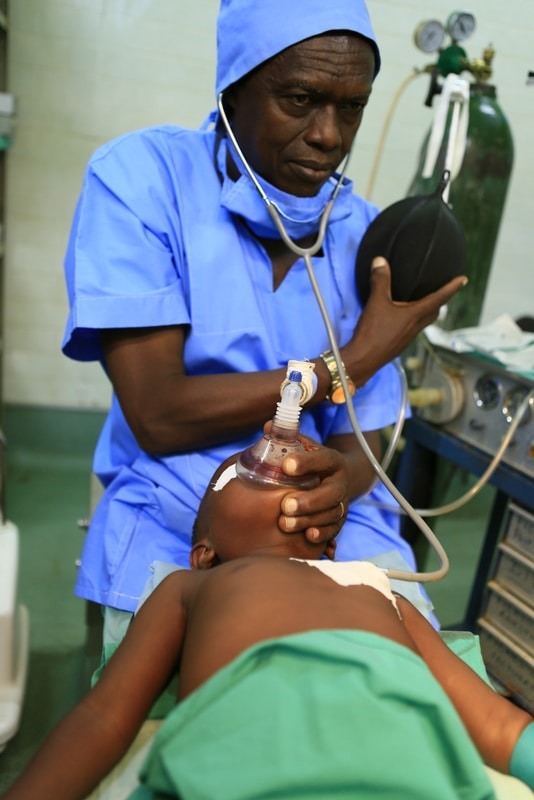
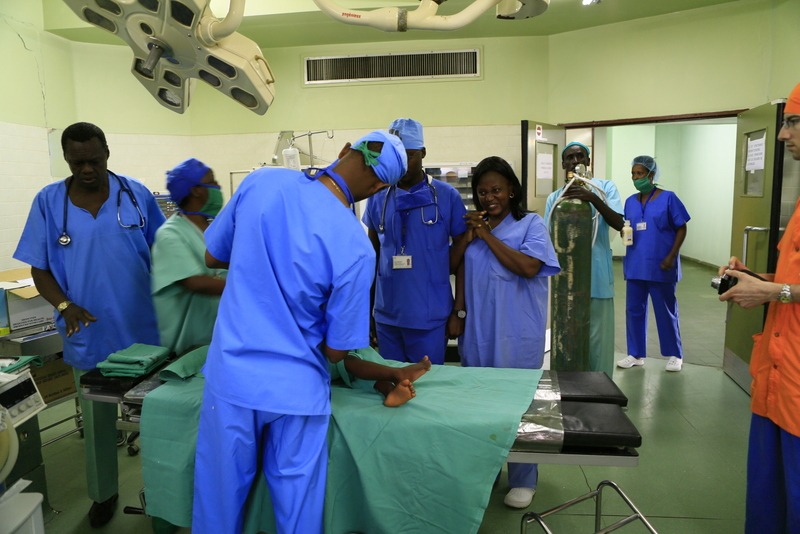
Each surgical workshop includes an anaesthetist and an anaesthesia assistant who work side by side with local teams in the operating theatre.

Anaesthesia Programme
In sub-Saharan Africa, anaesthesia is one of the main factors limiting access to surgery. Training surgeons without strengthening anaesthesia would leave the job half done. This is why 2nd CHANCE runs a dedicated programme to support the African teams who keep patients safe before, during and after every operation.
Why a dedicated programme
In most of sub-Saharan Africa, anaesthesia is delivered by nurse anaesthetists or technicians who often work alone, with uneven equipment and limited access to continuing education. Research, including studies by 2nd CHANCE anaesthetists, shows how closely anaesthesia-related mortality is tied to low-resource settings.
A surgeon’s skill is only one link in the chain. Every patient’s outcome also depends on the anaesthesia team, hygiene, monitoring and post-operative care. That is why anaesthesia is built into every 2nd CHANCE programme.
For 2nd CHANCE, quality surgery is inseparable from perioperative safety. Strengthening local anaesthesia skills is not an add-on to our surgical training. It is a condition for it.
What the programme does
Each surgical workshop includes an anaesthetist and an anaesthesia assistant who work side by side with local teams in the operating theatre.
Our anaesthetists mentor their peers directly at the bedside, so that local staff deliver general and spinal anaesthesia safely and independently.
We promote pulse oximetry, oxygenation and the WHO Surgical Safety Checklist, and distribute oximeters to partner hospitals.
Teaching surgeons about anaesthesia
Our workshops include theory sessions on anaesthesia and post-operative pain management for surgeons. A shared understanding of risk builds a safety culture across the whole operating team.
Today, without anaesthesia, there is no surgery.
Measuring what we teach
To make sure training translates into practice, we track a set of simple procedural steps taught during our workshops. Observing them over time shows what has been learned, and where further support is needed.
Preoxygenation, ventilation and intubation.
Infection prevention before, during and after surgery.
Checking machines, drugs and monitoring before each case.
Shared checks by the whole team at every operation.
Advocacy and research
Anaesthesia remains largely invisible in global health debates. We work to change that, from the operating theatres where we train to the international forums where health priorities are set.
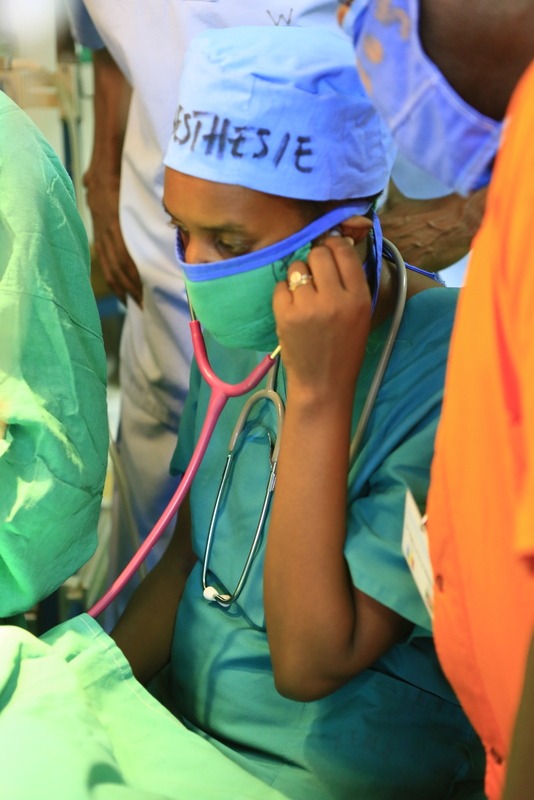
We raise awareness among surgeons and local health authorities of the needs of anaesthesia teams.
Our anaesthetists teach humanitarian anaesthesia to University of Geneva medical students and at Geneva University Hospitals.
As a member of the G4 Alliance, 2nd CHANCE advocates for surgery and anaesthesia to be recognised as essential components of primary health care.
Our anaesthesia team
Since the programme began, successive generations of volunteer anaesthetists and anaesthesia assistants have joined 2nd CHANCE missions. They work alongside the African anaesthesia professionals who increasingly share this mentoring role with them.
Here are our latest actions in the field: through specialized interventions, patients suffering from burns, congenital malformations, obstetric fistulas, or goiters have regained their health, dignity, and independence. These essential treatments transform not only the lives of the patients but also those of their families and communities.
For detailed results and figures, see our annual reports.